
Raipur, July 6, 2026: The Department of Neurosurgery, AIIMS Raipur, successfully organized a National Craniovertebral Junction (CVJ) Surgery Workshop under the aegis of Neurological Society of India, bringing together eminent neurosurgeons, faculty members, residents, and delegates from across India for an intensive academic program dedicated to one of the most challenging regions in neurosurgery. Workshop was held at the institutes advanced cadaveric laboratory in the anatomy department.
The craniovertebral junction is the delicate region where the brain joins the upper spinal cord. It contains vital nerves and blood vessels that control breathing, movement, balance and other essential body functions. Even small abnormalities in this area can cause severe neck pain, weakness in the arms and legs, difficulty in walking, swallowing problems and, in some cases, life-threatening neurological complications.
Because of its complexity, surgery in this region demands exceptional precision, specialized equipment and highly trained surgeons. Advances in surgical technology, imaging, navigation, and minimally invasive approaches have significantly improved patient outcomes, making continuous training and skill enhancement essential for neurosurgeons.
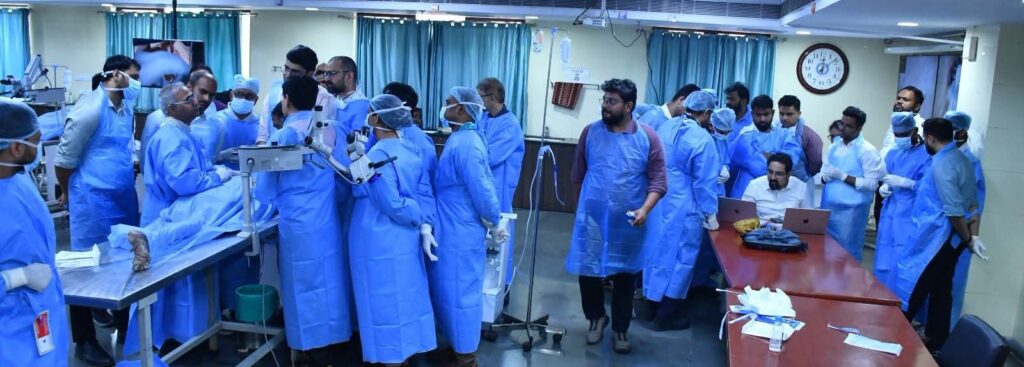
The workshop featured expert lectures, case-based discussions, panel interactions, and cadaveric demonstrations focusing on the latest concepts in the diagnosis and management of craniovertebral junction disorders. Participants received hands-on exposure to contemporary surgical techniques, instrumentation, preoperative planning, and management of complex CVJ pathologies.
Chief guest- Lt. GEN. Ashok Jindal (Retd),Executive Director, AIIMS Raipur inaugurated the workshop and emphasized that AIIMS Raipur has emerged as an important centre for advanced neurosurgical education and training. By organizing high-quality national workshops and continuing medical education programs, the institute is helping bring world-class neurosurgical expertise to Central India while ensuring that patients receive the latest evidence-based treatment close to home.
Speaking on the occasion, Dr. Anil Kumar Sharma, Organiser of the workshop and Head of Department of Neurosurgery, AIIMS Raipur, emphasized that the workshop was designed to bridge the gap between theoretical knowledge and clinical practice. He stated that surgery around the craniovertebral junction demands exceptional anatomical understanding, meticulous planning, and technical precision. Such academic initiatives provide an invaluable platform for young neurosurgeons to learn from experienced experts and ultimately improve patient care.
Speaking on the occasion, Dr. Soumitra Trivedi, Head, Department of Anatomy, AIIMS Raipur, said this workshop provides young neurosurgeons with the opportunity to learn directly from experienced experts. AIIMS Medical Superintendent Dr D K Tripathi stressed that such workshops are need of hour. Senior faculty members from the institute also expressed their views
The workshop witnessed the participation of distinguished national faculties, Prof. Arun Kumar Srivastava from SGPGI, Prof Adesh Shrivastava from AIIMS Bhopal who shared their extensive experience in managing congenital anomalies, traumatic injuries, degenerative disorders, tumors, vascular lesions, and instability affecting the craniovertebral junction. Interactive discussions enabled participants to understand decision-making strategies, avoid surgical complications, and adopt evidence-based approaches in complex cases.
The workshop concluded with an enthusiastic response from delegates, who appreciated the opportunity to interact with some of the country’s leading experts in craniovertebral junction surgery. The workshop witnessed enthusiastic participation from neurosurgeons, orthopedic spine surgeons, residents and fellows from medical institutions across India. Interactive discussions allowed participants to exchange experiences, analyse challenging clinical cases and learn practical decision-making strategies.